The Hall of Supreme Harmony at the heart of the Forbidden City (photo: Dreamstime / travel stock)
By Bob · BeijingTripAdvisor.com
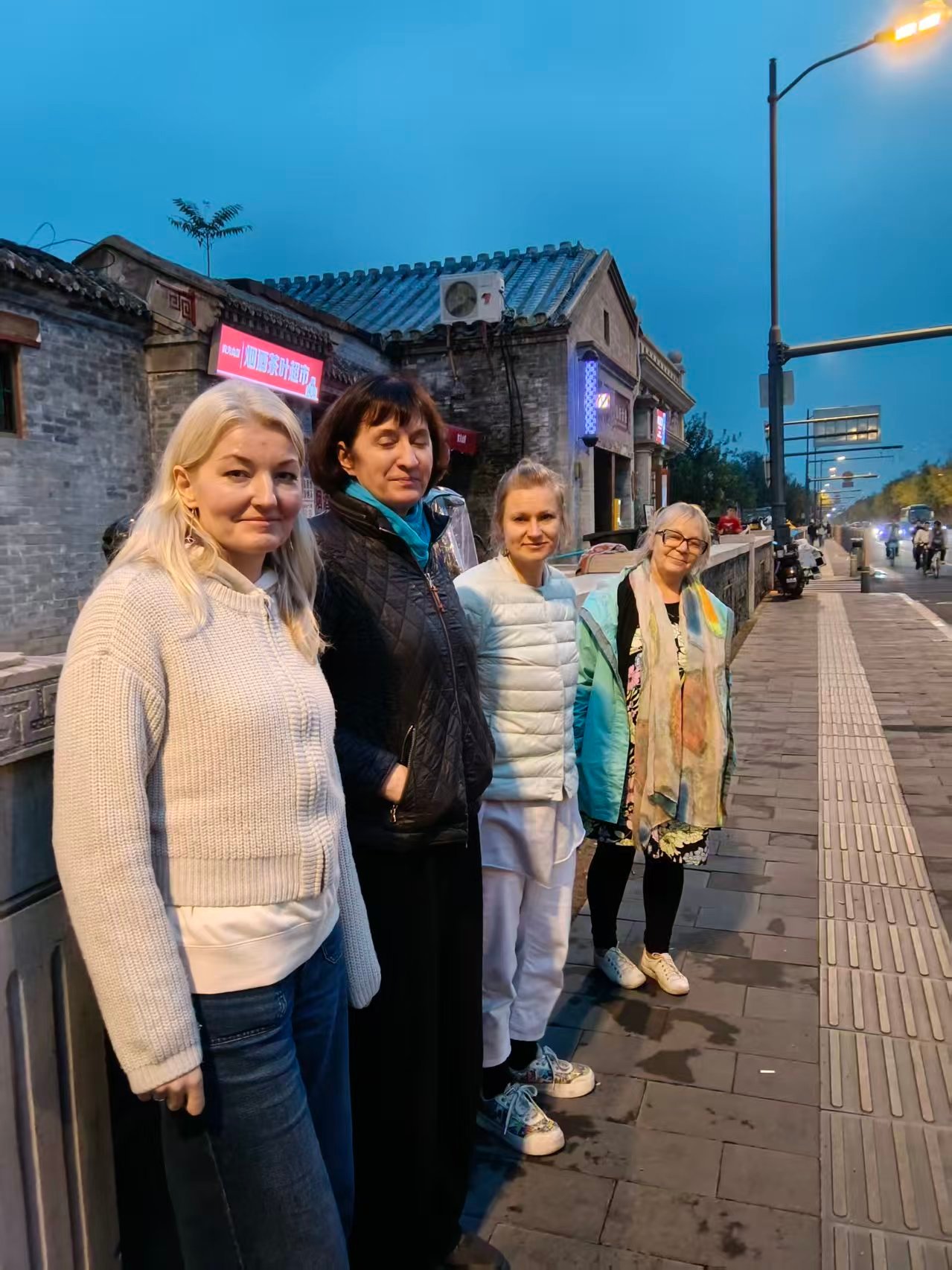
3 days ago I led a group of eleven painters from Estonia at the east gate of the Forbidden City. They had visited other cities in China, and they wanted one thing: see the real Beijing in a single walking day — not the brochures, not the tour-bus version.
Estonia is a small, quiet country of medieval spires, pine forests and a population smaller than Haidian District. So when I asked what they expected, they shrugged and said: “We want to feel the scale. And we want to see whether the China in our phones is the real one.”
We did both, on foot. This is the story of that day.
01 Morning: Walking into 600 Years of Empire
We started at Donghuamen, the east glory gate, just after 11 AM. The crowds are still thick at that hour, and the red walls are clean under the sun. We walked along the inner golden water bridge and into the outer court.
The first thing every foreign visitor says is the same: “It’s bigger than I thought.”
Fig 1: The Hall of Supreme Harmony rises on three tiers of white marble (photo: CFP / CGTN)
And it is. The Forbidden City covers 72 hectares and once held 24 emperors across the Ming and Qing dynasties. But size isn’t the point I tell my clients — the empty space is.
We stopped in the broad stone square before the Hall of Supreme Harmony. I pointed out: no trees, no benches, no shade. Just flagstones, the wide marble terrace, and the hall itself floating above you.
“Why no trees?” I asked. They guessed for ten seconds. Then I explained: for 500 years, the emperor sat on that throne and looked out at this exact square. Ministers stood where we stood. The emptiness was designed to make a person feel small — very, very small — before the Son of Heaven.
My Estonian clients went quiet for a moment. Then one of the painters said: “Back home, our parliament building is the size of a gym hall.”
We moved on. I showed them the bronze lions with the hidden little cub under the female paw (the imperial heir), the carved marble ramp that only the emperor’s cart could roll over, and the reason the roof tiles are yellow — yellow was the emperor’s color, and commoners were forbidden from it on pain of death.
By 13:30 we had walked the central axis, slipped into the quieter western palaces, and seen the empress quarters. They were tired, but the good kind — the kind that comes from actually being somewhere.
Before lunch, there was one more thing I never skip. We walked out the north gate of the Forbidden City and straight up the hill at Jingshan Park, right behind the palace. It is a short, easy climb — a few hundred steps through pine trees — and at the top the whole Forbidden City spreads out below you like a single golden painting: row after row of yellow-tiled roofs, the red walls, the five pavilions of the hill itself. The painters went quiet again. Then they reached for their cameras and shot the panorama from every angle, photographing the same skyline again and again as the light shifted.
02 Lunch: Between Two Chinas
We exited through the north gate and After taking a short rest, we climbed the Jingshan in Jingshan Park.
03 Afternoon: 798 Art District, the Other Beijing
We came down from Jingshan through the east gate, walked east a few blocks to the China Art Museum metro station, and rode the underground for a few dozen minutes north-east to Dashanzi. When we stepped out, the world changed completely.
It was already four in the afternoon when we arrived, and the painters were hungry. The group traveled with an Estonian team leader who speaks Chinese, and it was she who arranged the meals — so we ate lunch inside 798, at a Western restaurant, since the district has no Chinese restaurants at all. The portions were small and the bill was painful. To be honest, dining inside 798 is a tourist trap: you pay boutique prices for plates that barely feed anyone. When I plan the day myself, I take my group just outside the walls to a proper Chinese kitchen instead.
But we did not come here for the coffee or the vintage shops. This Estonian group was made up entirely of painters — all eleven of them. 798 was the real reason they had flown to Beijing: to see Chinese painters and contemporary artists info, to stand in front of their work, and to look for what our creative traditions share — and where our imaginations run in different directions.
Gone: red walls, golden tiles, imperial symmetry. Here instead: Soviet-style factory buildings, arched ceilings, exposed pipes, and walls covered in graffiti.
Fig 2: Graffiti covers a brick wall inside the 798 Art District (photo: Dreamstime / travel stock)
798 was built in the 1950s with help from East German engineers — a top-secret electronics factory for the Chinese military. The big arched windows, the saw-tooth roofs, the heavy concrete: all Bauhaus-influenced industrial design, imported from a country my Estonian clients remembered from their Soviet era.
“It looks like the factory districts in Tallinn,” one of the painters said. “Same language of concrete.”
That’s the point. After the factories moved out in the 1990s, artists moved in. By 2002, painters, sculptors and gallery owners had rented the cheap workshops. Today 798 is Beijing’s contemporary art hub — hundreds of galleries, design studios, bookshops, cafes and street sculptures packed into a walkable neighborhood.
We wandered for three hours. We popped into a printmaking gallery, stood in front of a giant stainless-steel horse by a Chinese artist, and sat in a cafe under a 6-meter-high arched roof drinking flat whites.
The contrast with the morning was the whole point. The Forbidden City is Beijing looking backward, at 600 years of empire. 798 is Beijing looking forward, at whatever comes next. To walk both in one day is to understand that this city is not one story — it is many layers stacked on top of each other.
04 Why a Walking Tour With a Local Matters
I’m Bob, and I’ve been showing Beijing to visitors for years. I don’t run big buses. I don’t read from a script. I walk with you — one small group, one real day, and we go at your pace.
One detail my painter group especially appreciated: everyone could hear me. For groups of ten or more, I arrange rental wireless tour headsets and earphones, so your whole team can hear the guide clearly even across a noisy palace courtyard or a crowded gallery. I offer this headset-and-earphone rental service for foreign tour groups on every tour — you do not need to bring your own, and you will not have to hunt for them in Beijing.
What you get on this route:
- A local who speaks English and actually knows the stories behind the plaques — not just the dates.
- Skip-the-worry logistics: tickets, metro directions, the right noodle shop, the quiet corners tour buses never see.
- A route built for walking: Forbidden City in the cool morning, lunch off the main street, 798 in the afternoon when the galleries are open and the light is soft.
- Time for your questions: How does China really work? What do Beijingers eat for breakfast? Is the air always like this? Ask me anything.
By sunset my Estonian clients were back at their hotel, feet sore, cameras full. One of the painters messaged me that night: “We came expecting a museum. We got a city.”
That’s the whole job.
05 Book Your Own Beijing Walking Day
This exact route — Forbidden City morning, 798 Art District afternoon, real Beijing noodles in between — is one of my favorite private day tours. It works for solo travelers, couples, small families and friends, and I can adjust the pace, the length, and the stops to match what you actually want to see.
WhatsApp/WeChat: +86 135 2231 0506 Web: www.BeijingTripAdvisor.com Location: Beijing, China
Tell me where you’re coming from, what you’re curious about, and how many days you have. I’ll build the walk around you.